Sofwave in Seoul · Published
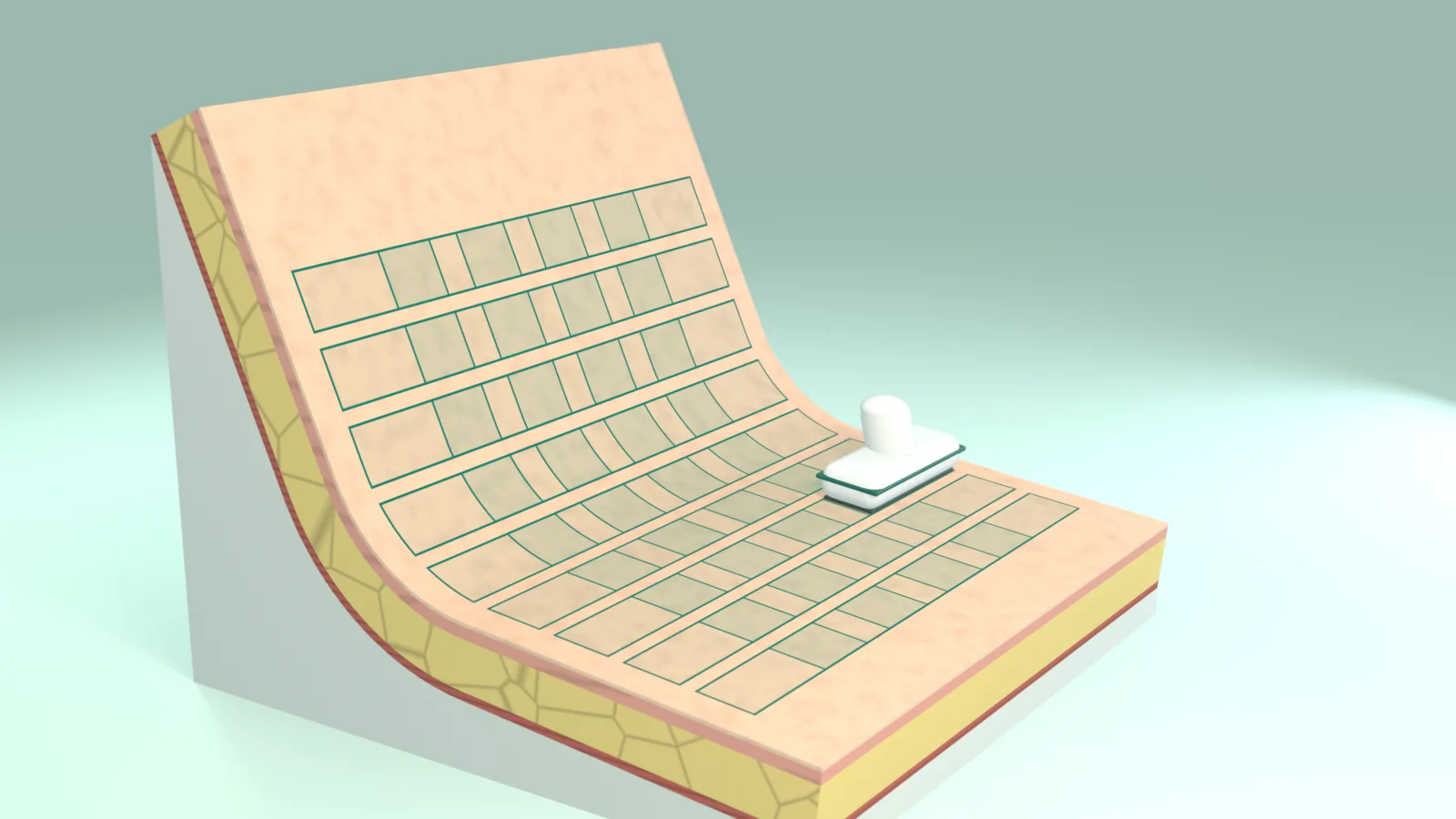
What the K211483 study measured under the chin
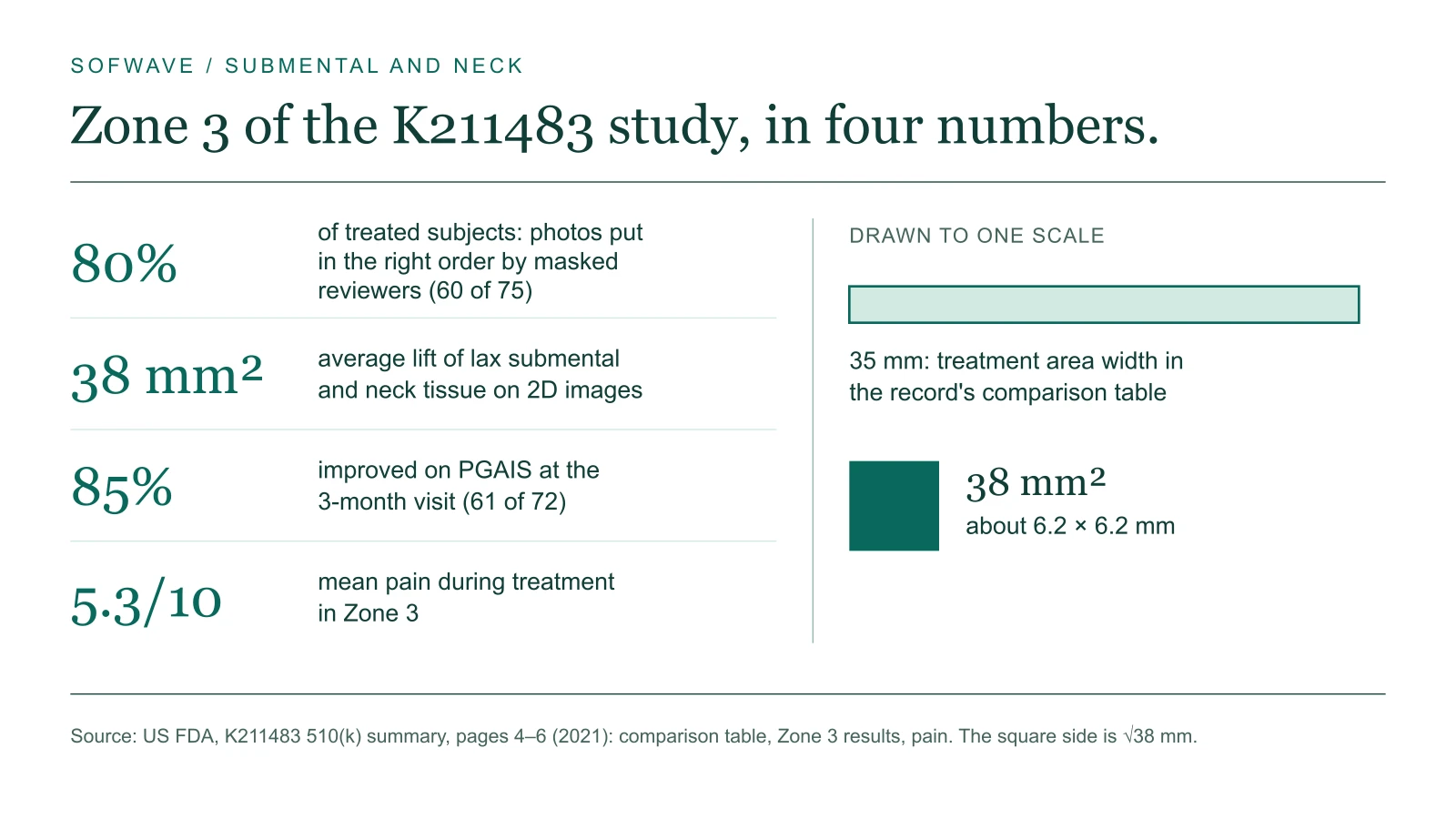
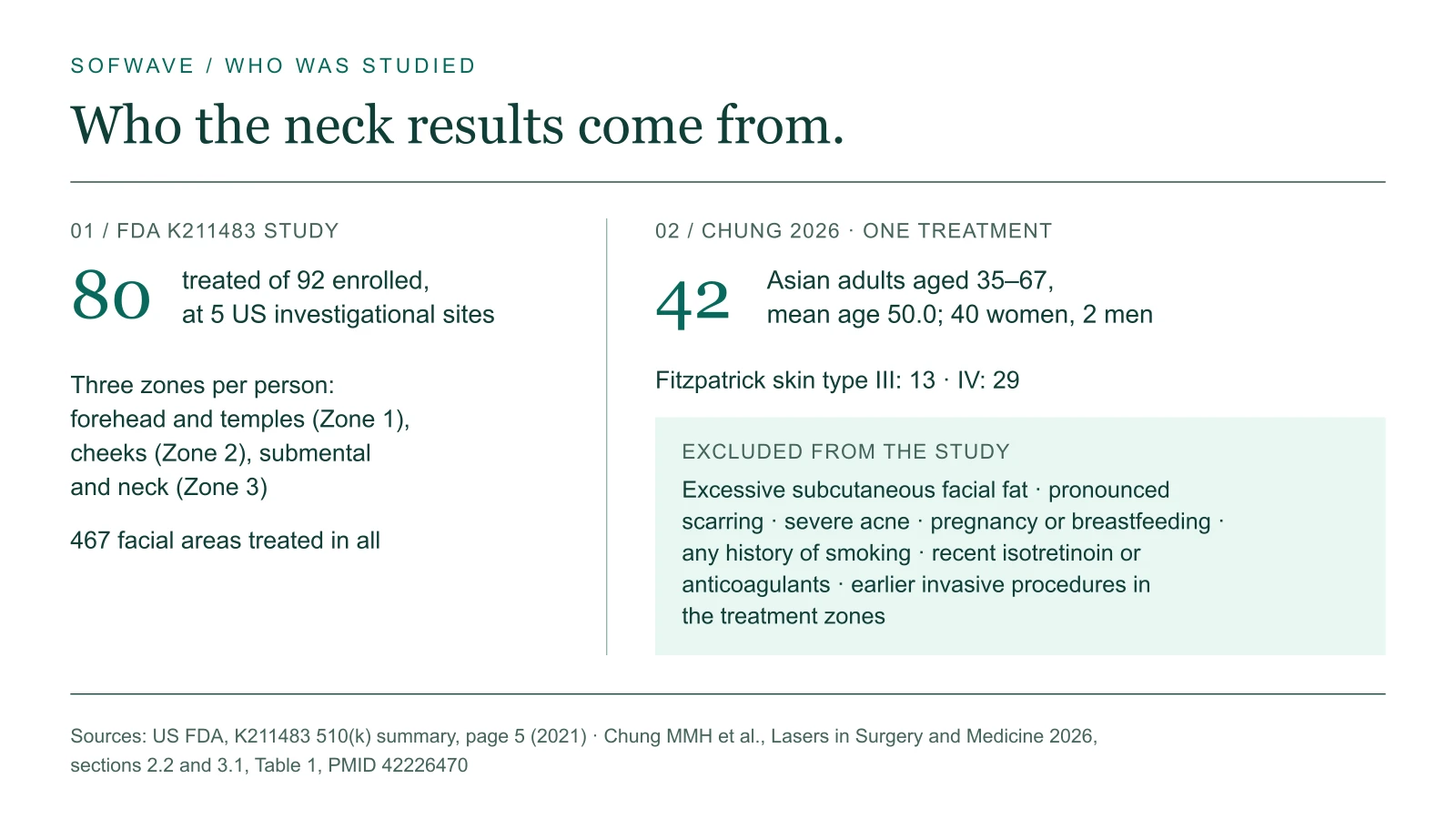
K211483 is the US FDA 510(k) record for the SofWave System dated November 15, 2021. The clinical study in its summary enrolled 92 subjects and treated 80 at five US sites, on three zones each; Zone 3 was the submental area (beneath the chin) and the neck. [1]
Zone 3 had two co-primary endpoints. Independent masked evaluators, shown each subject's image sequence, identified the before and after photos correctly for 80% (60/75) of treated subjects, based on the agreement of two reviewers. Quantitative 2D imaging measured an average lift of lax submental and neck tissue of 38 mm². As a secondary endpoint, 85% (61/72) were rated improved on the Physician Global Aesthetic Improvement Scale (PGAIS) at the 3-month follow-up visit. [1]
The same study measured the eyebrow as a distance in millimetres; see how trials judged brow and wrinkle photos.
What 38 mm² means
A square millimetre is a unit of area, so the neck result is a measured area of lift rather than a distance. The summary gives 38 mm² as an average from quantitative 2D imaging and does not describe the outline that was measured. For scale, 38 mm² is the area of a square about 6.2 mm on each side, and the record's comparison table gives the treatment area width as 35 mm. Because it comes from 2D images, it is not a volume. [1]
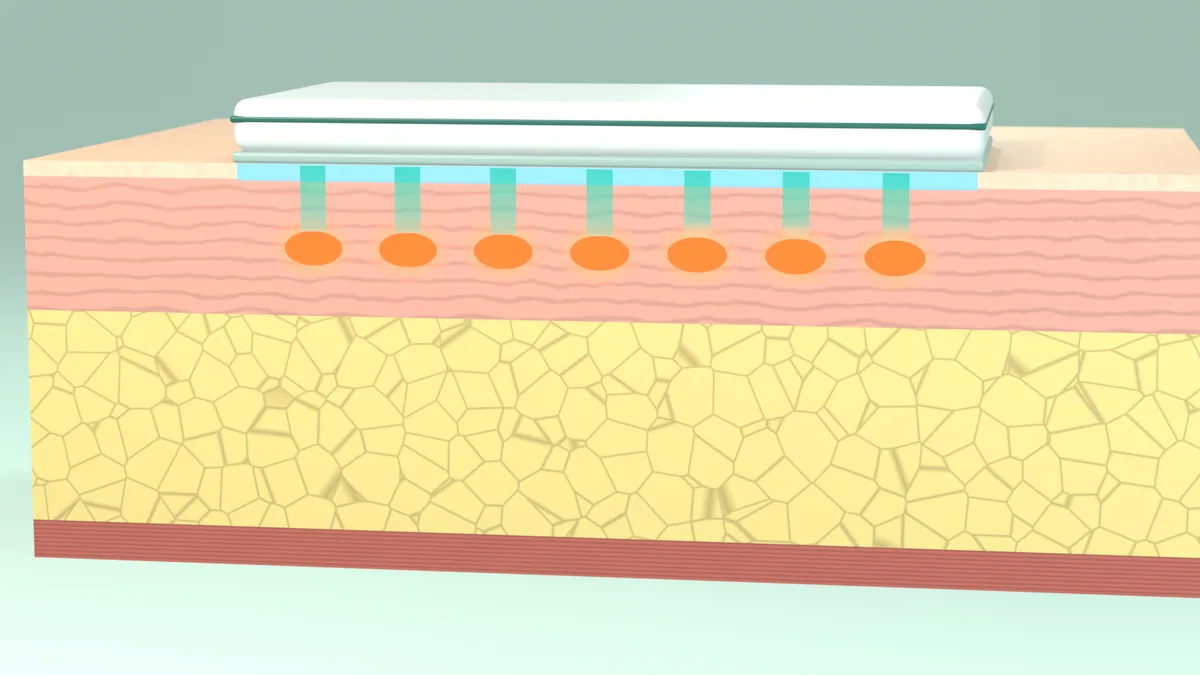
Sofwave delivers its energy at a fixed depth of 1.5 mm in the mid-dermis. [3]
After one treatment: 3, 6 and 9 months
A 2026 study by dermatologists at the University of Hong Kong treated 42 Asian adults once over the full face, the neck and the submental area and followed them for nine months. It was open-label, with no control group, and Sofwave Medical Ltd. funded it. On the neck and submental area, pulses averaged 3.41 J with a mean of 3.5 passes, and the protocol called for 30%–50% overlap for each pulse. [2]
Two assessors, blinded to the time point, rated submental and neck laxity improved in 35 of 42 (83.3%) at 3 months, 30 of 42 (71.4%) at 6 months and 27 of 39 (69.2%) at 9 months. Satisfaction with the submental and neck result was 64.3%, 57.2% and 38.5% at the same visits. [2]
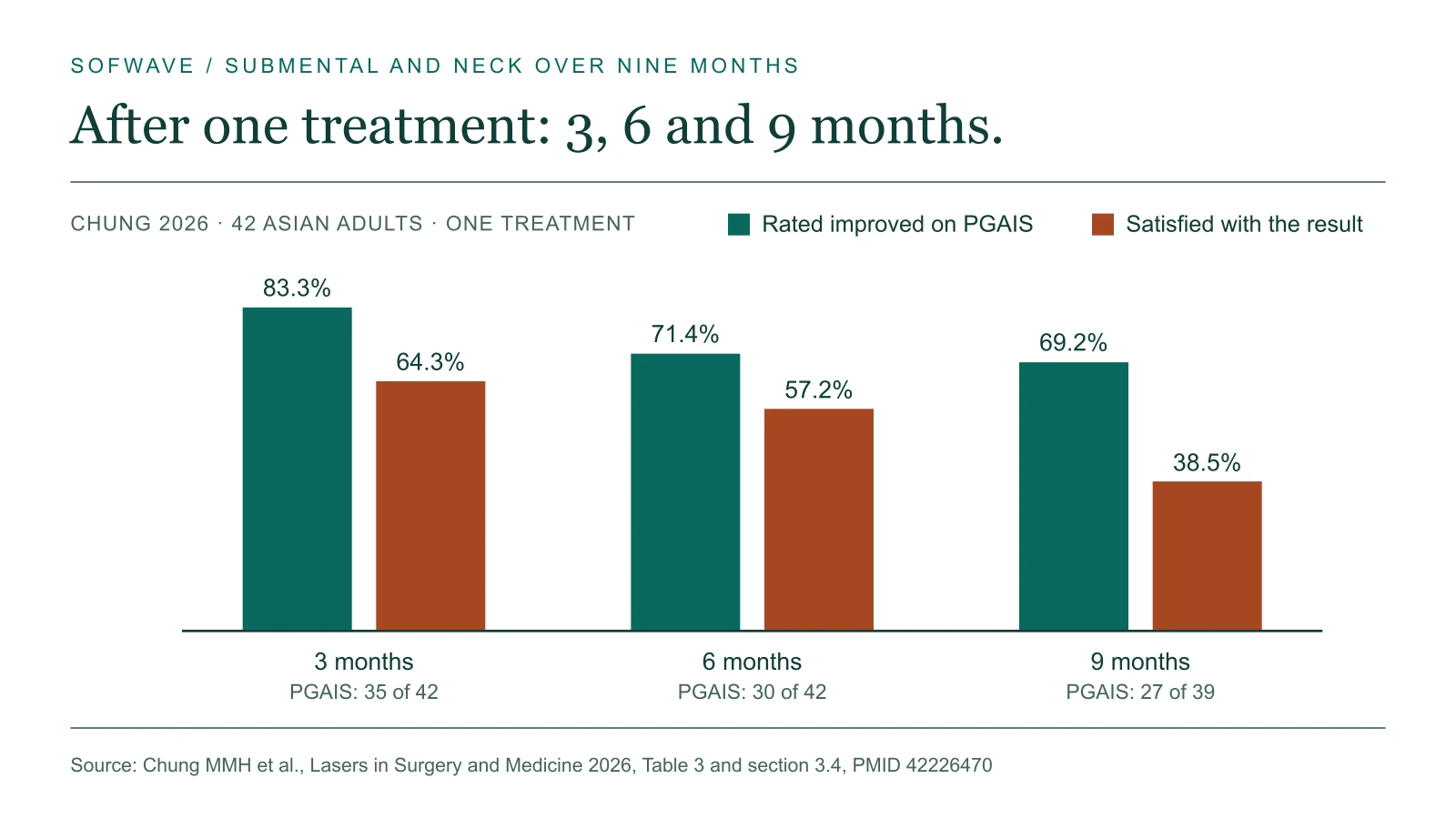
At 9 months the share satisfied with the result, 38.5%, was lower than the share the assessors rated improved, 69.2%. [2]
The K211483 summary does not state a number of sessions. A 2024 study of 15 people aged 40 to 69 used two sessions, with the investigators grading photographs of the eyebrow and of the submental and neck area at 3 and 6 months. [1] [4]
Who was studied, and when fat is the concern
The 2026 study enrolled adults who wanted to improve facial wrinkles or lift lax skin. It excluded people with excessive subcutaneous facial fat, along with pronounced scarring, severe acne, pregnancy or breastfeeding, any history of smoking, recent isotretinoin or anticoagulant use and earlier invasive procedures in the treatment zones. Its 42 participants were aged 35 to 67 (mean 50.0), 40 were women, and their Fitzpatrick skin types were III (13) or IV (29). [2]
In a 2026 review, patient selection for ultrasonic facial rejuvenation centres on mild to moderate skin laxity. [3] If the fullness under your chin is mostly fat, ask which other options fit that concern; candidates and contraindications covers screening factors.
Pain and the first days
The mean pain level during treatment was 5.3 out of 10 for Zone 3 in the K211483 study. [1] In the 2026 study, a 4% lidocaine cream was applied under cling film for 45 minutes beforehand, the mean pain score for the whole treatment was 5.06 out of 10, and 3 of 42 people needed paracetamol. Right after treatment, trace or slight redness was seen in 21 of 42 and trace or slight swelling in 3; all had resolved by the later visits. [2] For the days after, see aftercare and downtime.
Questions for a neck consultation
- Is the change I want tighter skin, or less fullness under the chin?
- Which zones will be treated, with how many passes and how much overlap?
- When will the result be judged, and is there a check at 6 or 9 months?
Delight Dermatology Clinic’s Sofwave treatment page describes its treatment protocol.
Common questions
Does Sofwave work on the neck and under the chin?
In the study summarized in FDA record K211483, quantitative 2D imaging measured an average lift of 38 mm² of lax submental and neck tissue, masked reviewers identified the before and after photos correctly for 80% (60/75) of treated subjects, and 85% (61/72) were rated improved on the PGAIS at the 3-month visit.
How long do Sofwave neck results last?
In a 2026 study of 42 Asian adults treated once, assessors rated submental and neck laxity improved in 83.3% at 3 months, 71.4% at 6 months and 69.2% at 9 months. Satisfaction with the result was 64.3%, 57.2% and 38.5% at the same visits.
Does Sofwave remove fat under the chin?
Sofwave targets the mid-dermis at a depth of about 1.5 mm. The 2026 study excluded people with excessive subcutaneous facial fat, and K211483 reports its neck result as tissue lift measured on 2D images.
Does Sofwave help jowls?
K211483 reports results for the brow and for the submental and neck zone, and the 2026 study gave PGAIS ratings for the brow, facial wrinkles and submental and neck laxity; neither gives a separate jowl or jawline rating.
Does Sofwave on the neck hurt?
In the K211483 study, the mean pain level during treatment was 5.3 out of 10 for the submental and neck zone. The 2026 study applied a 4% lidocaine cream for 45 minutes beforehand.
Sources
- US FDA. K211483, SofWave System: letter dated November 15, 2021 and 510(k) summary. Comparison table on summary page 4, clinical study on pages 5–6.
- Chung MMH, Wong CSM, Chan MWM, Shek SYN, Yeung CK, Chan HHL. Evaluating the use of high-intensity non-focused ultrasound treatment to improve skin laxity and facial wrinkles in Asian patients. Lasers in Surgery and Medicine, 2026. PMID 42226470. Study funding: Sofwave Medical Ltd.
- Liao D, Prasad A, Bloom JD. Use of ultrasound in face and neck rejuvenation. Facial Plastic Surgery, 2026. PMID 41985490. Review.
- Gold MH, Biron J. Efficacy and safety of high-intensity, high-frequency, non-focused ultrasound parallel beams for facial skin laxity. Journal of Cosmetic Dermatology, 2024. PMID 38031530.