Sofwave in Seoul · Published
Gallery photos and trial photos
Sofwave's manufacturer keeps a before-and-after gallery sorted by treatment area, with tabs for the neck, eyebrows, submental area and wrinkles among others. Each card shows one person, names the clinician or clinic that supplied the photos and carries a time label such as “12 Weeks” or “3 Months”. None of the neck, eyebrow, submental or wrinkle cards states how many sessions were given. [3]
The eyebrow and wrinkle tabs cover areas that trials scored from photographs: K211483 measured the brow, and a 2026 study rated eyebrow elevation and facial wrinkles. [1] [2]
How the K211483 study judged brow photos
K211483 is the US FDA 510(k) record for the SofWave System dated November 15, 2021. Its 510(k) summary describes a clinical study at five investigational sites in the United States: 92 subjects were enrolled and 80 treated. Each was treated on three zones: the forehead and temples for eyebrow lifting (Zone 1), the cheeks (Zone 2), and the submental area and neck (Zone 3). [1]
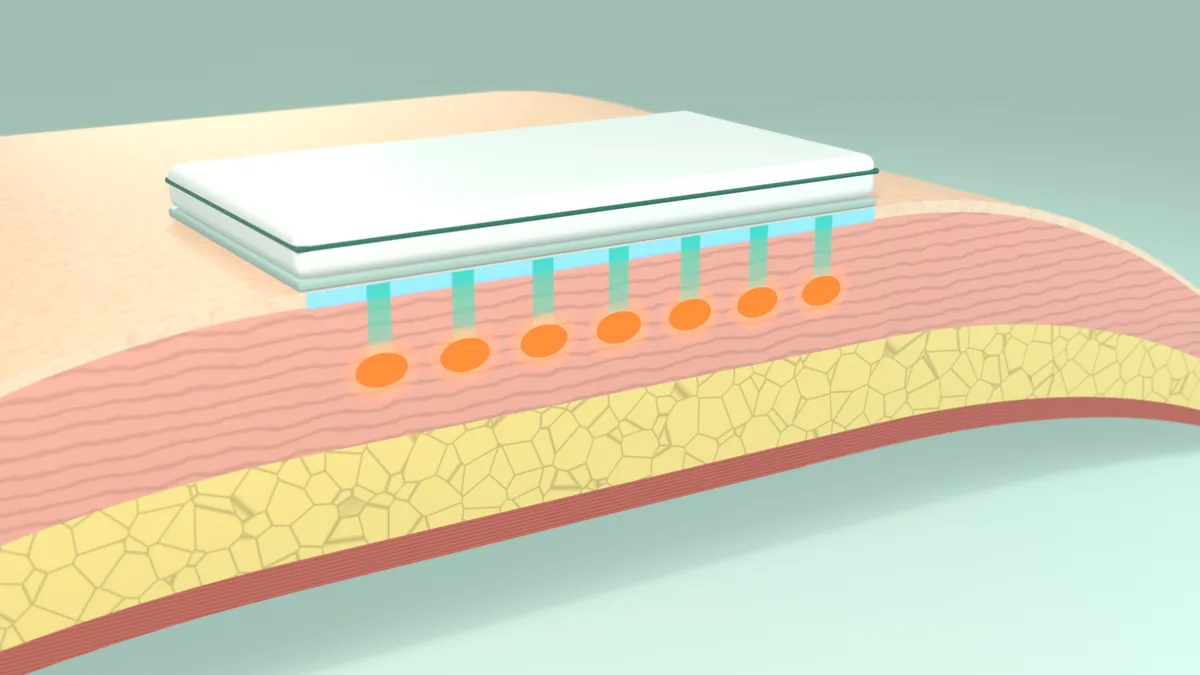
Sofwave's applicator sends seven parallel ultrasound beams to the mid-dermis, at a depth of about 1.5 mm, while a cooling element cools the skin it touches. [2] [4] [1]
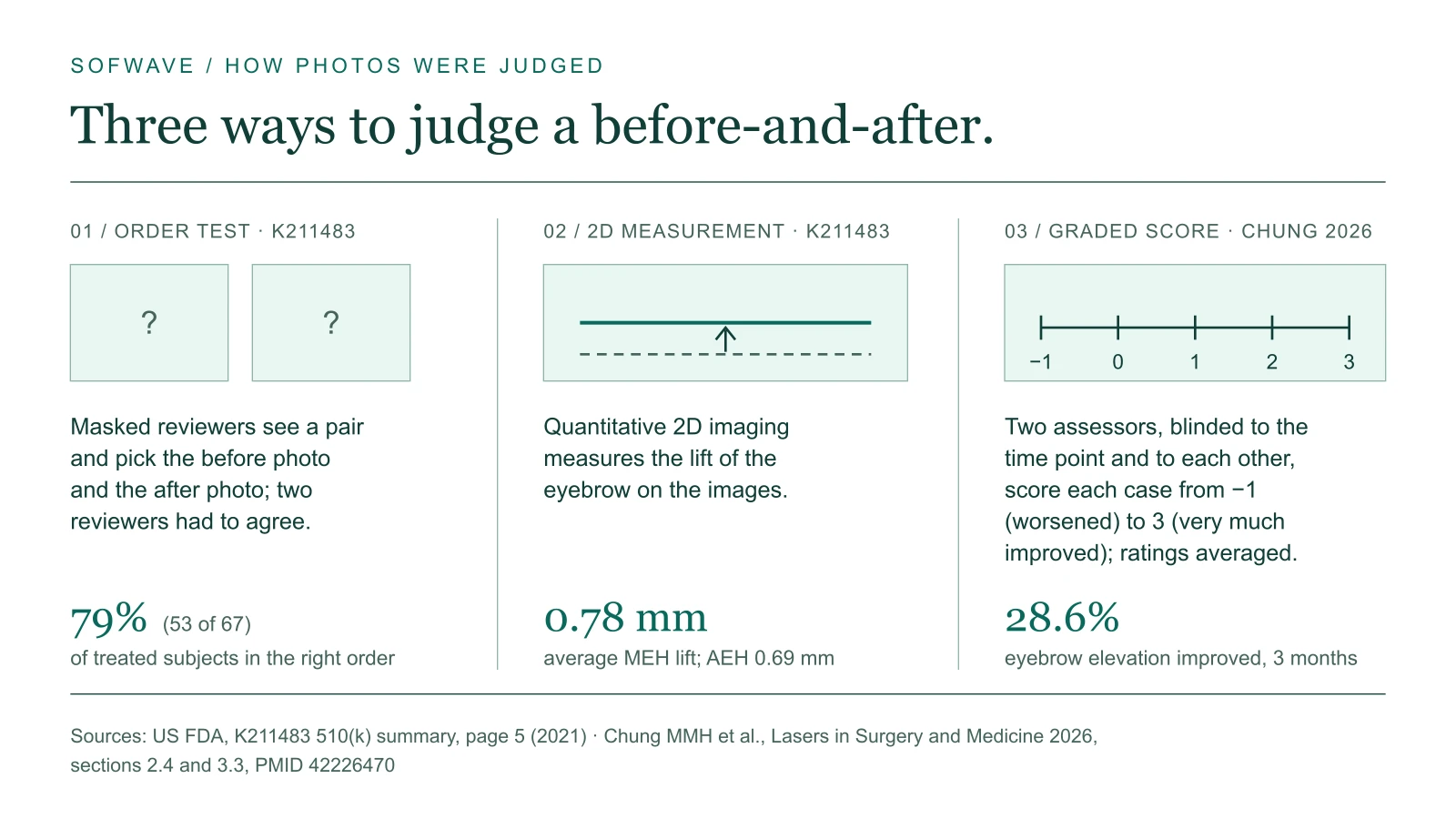
Zone 1 had two co-primary endpoints. In the first, independent masked evaluators were shown each subject's image sequence and had to identify which photo was taken before treatment and which after. With two reviewers in agreement, they did so for 79% (53/67) of treated subjects. In the second, quantitative 2D imaging measured an average lift of 0.78 mm for maximal eyebrow height (MEH) and 0.69 mm for average eyebrow height (AEH). [1]
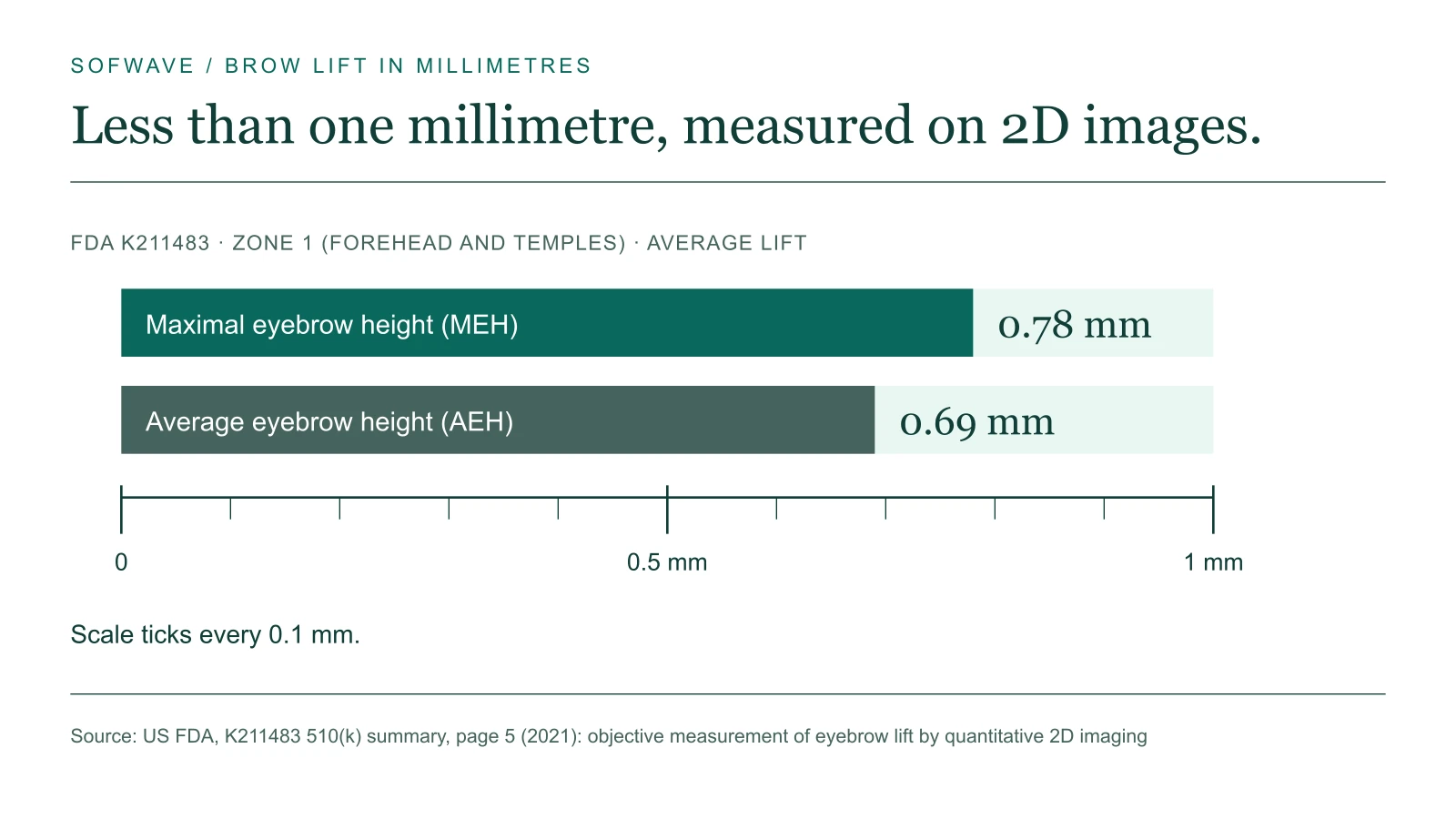
The two numbers answer different questions. The order test asks whether an evaluator who did not know the order could see a change; the 2D measurement gives its size, under one millimetre at the brow. As a secondary endpoint, 80% (51/64) of subjects were rated improved on the Physician Global Aesthetic Improvement Scale (PGAIS) at the 3-month follow-up visit. [1]
Brow and wrinkle results over nine months
A 2026 study by dermatologists at the University of Hong Kong followed 42 Asian adults aged 35 to 67, 40 of them women, after a single treatment of the full face, the neck and the submental area. It was prospective and open-label, with no control group. All 42 returned at 3 and 6 months and 39 at 9 months. Sofwave Medical Ltd. funded the study. [2]
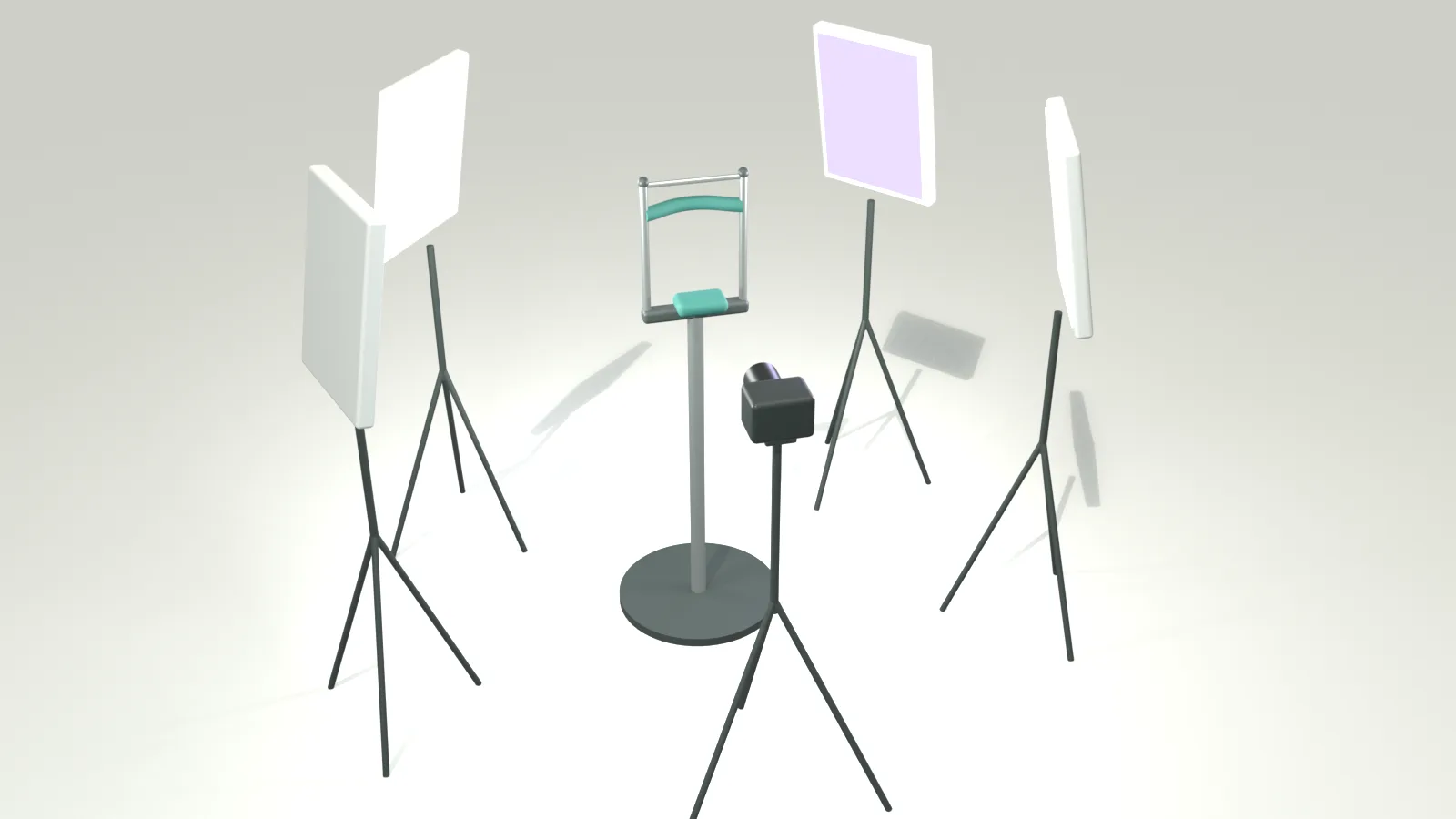
Photographs were taken with a configurable head support, under four lighting conditions, from the front and from each side at 37°. Two assessors, blinded to the time point and to each other's rating, scored each case on the PGAIS, which runs from −1 (worsened) to 3 (very much improved); the two ratings were averaged. [2]
| Rated improved | 3 months (n = 42) | 6 months (n = 42) | 9 months (n = 39) |
|---|---|---|---|
| Eyebrow elevation | 12 (28.6%) | 11 (26.2%) | 8 (20.5%) |
| Facial wrinkles | 16 (38.1%) | 10 (23.8%) | 6 (15.4%) |
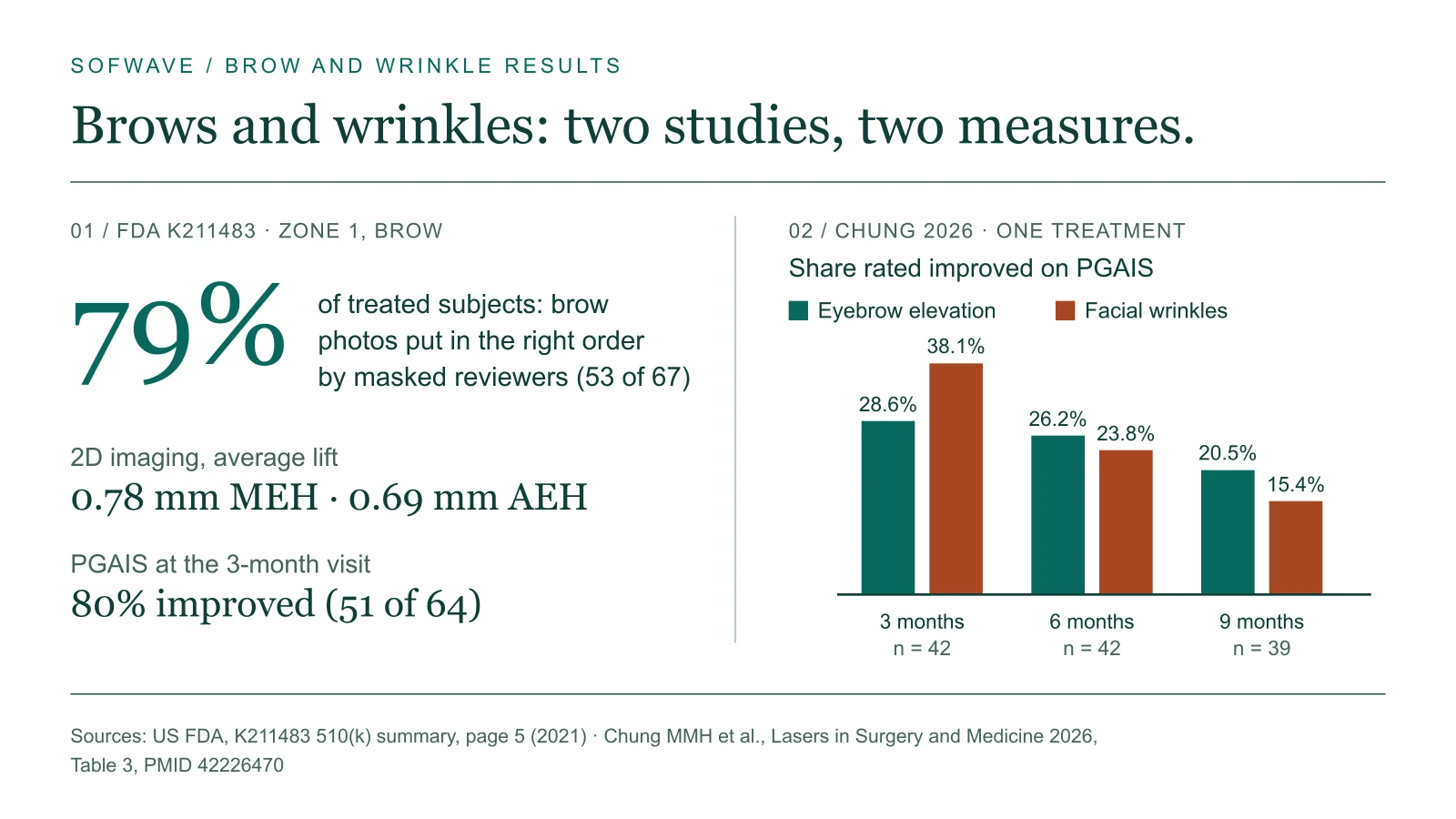
Both shares were lower at 9 months than at 3. The authors report that efficacy across the treated areas gradually declined over the nine months and suggest that periodic maintenance treatments may be needed to sustain the initial effect. [2] The same study rated submental and neck laxity on the same scale; those results, with the K211483 neck zone, are in Sofwave under the chin and on the neck.
Who looked at the photos
In K211483, independent masked evaluators made the before-or-after call. In the 2026 study, two assessors did not know the time point of the photos they scored. In a smaller 2024 study of 15 people aged 40 to 69 who had two sessions, the study investigators graded the baseline and follow-up photographs with the PGAIS themselves, at 3 and 6 months. [1] [2] [5]
What treated people reported
The K211483 summary also reports a patient questionnaire. For the eyebrow lift, 55% of subjects reported improvement and satisfaction. Asked whether they would undergo further treatments, 37 of 64 (58%) said yes; the rest said no or were not sure. The mean pain level during treatment was 6.4 out of 10 for Zone 1. One device-related adverse event was reported in the study; it was moderate and transient and resolved with topical cream alone. [1]
Is Sofwave worth it for brows and wrinkles?
Weigh the brow and wrinkle results against what a session costs in Seoul and the change you hope for; for screening factors, see candidates and contraindications. Delight Dermatology Clinic’s Sofwave treatment page describes its treatment protocol.
Common questions
Are Sofwave before-and-after photos measured?
A gallery photo shows one person. In the study summarized in FDA record K211483, masked reviewers put the brow photos in the right before-and-after order for 79% (53/67) of treated subjects, and quantitative 2D imaging measured an average lift of 0.78 mm for maximal eyebrow height.
When are Sofwave brow and wrinkle results judged?
In a 2026 study of 42 Asian adults treated once, eyebrow elevation was rated improved in 28.6%, 26.2% and 20.5% at 3 months, 6 months and 9 months, and facial wrinkles in 38.1%, 23.8% and 15.4%. In the K211483 study, 80% (51/64) were rated improved on the PGAIS at the 3-month visit.
What do people treated with Sofwave report?
In the K211483 patient questionnaire, 55% of subjects reported improvement and satisfaction for the eyebrow lift.
Is Sofwave worth it?
In the K211483 patient questionnaire, 37 of 64 subjects (58%) said they would undergo further treatments. Set the brow and wrinkle results against the cost of a session and the change you want.
How many Sofwave sessions are behind a before-and-after photo?
The manufacturer’s gallery cards for the brow and wrinkles, and for the neck and submental area, do not state a session count. The 2026 study used one treatment, and a 2024 study of 15 people used two sessions.
Sources
- US FDA. K211483, SofWave System: letter dated November 15, 2021 and 510(k) summary. Clinical study on summary pages 5–6.
- Chung MMH, Wong CSM, Chan MWM, Shek SYN, Yeung CK, Chan HHL. Evaluating the use of high-intensity non-focused ultrasound treatment to improve skin laxity and facial wrinkles in Asian patients. Lasers in Surgery and Medicine, 2026. PMID 42226470. Study funding: Sofwave Medical Ltd.
- Sofwave Medical. Before and After Gallery, with tabs for the neck, the eyebrows, the submental area and wrinkles. Accessed October 24, 2026.
- Liao D, Prasad A, Bloom JD. Use of ultrasound in face and neck rejuvenation. Facial Plastic Surgery, 2026. PMID 41985490. Review.
- Gold MH, Biron J. Efficacy and safety of high-intensity, high-frequency, non-focused ultrasound parallel beams for facial skin laxity. Journal of Cosmetic Dermatology, 2024. PMID 38031530.